


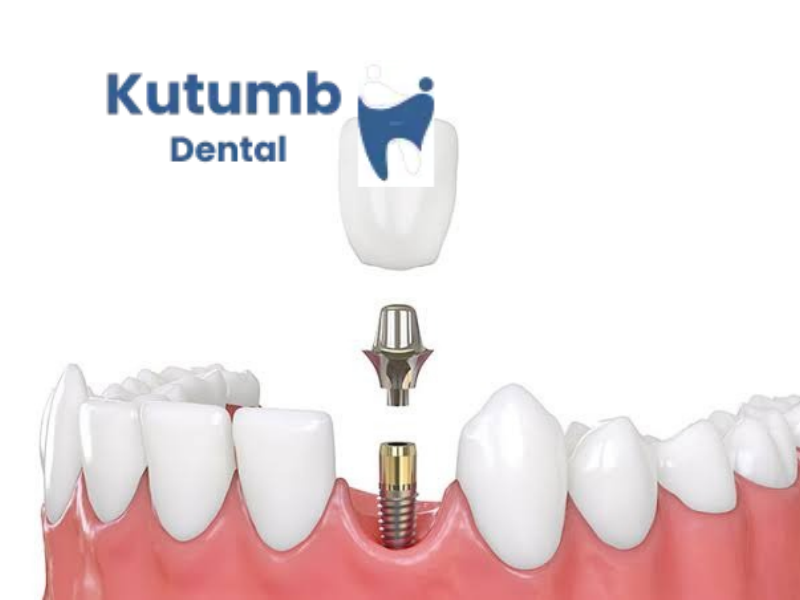
Missing a tooth can affect more than the appearance of your smile. It may make chewing uncomfortable, affect the way you speak, or make you feel less confident when smiling. When a tooth is lost, there are several ways to replace it, including bridges, dentures and dental implants. The right choice depends on your oral health, the condition of the surrounding teeth and your individual treatment needs.
If you are searching for dental implants in Ghaziabad, it is useful to understand how implants work, who may be suitable for them, what the treatment involves and how to care for them after placement.
What Are Dental Implants?
A dental implant is a small implant fixture placed into the jawbone to replace the root portion of a missing tooth. Once the implant has healed and integrated with the surrounding bone, it can support a dental crown, bridge or, in selected cases, a denture.
Unlike a removable denture, a dental implant is designed to provide a fixed foundation for tooth replacement. An implant-supported crown can be used to replace a single missing tooth, while implants can also be used as part of treatment for multiple missing teeth.
The exact treatment plan is different for every patient. A dentist needs to examine your teeth, gums and jawbone before deciding whether dental implants are suitable.
Why Consider Replacing a Missing Tooth?
A missing tooth can create practical and oral health concerns. Depending on where the tooth is missing, you may notice difficulty chewing or changes in your bite. Some people may also feel uncomfortable about a visible gap when speaking or smiling.
Replacing a missing tooth can help restore chewing function and improve the appearance of your smile. Dental implants may also help replace a missing tooth without requiring the adjacent teeth to be prepared in the same way that some conventional bridge treatments require.
However, an implant is not automatically the best option for every patient. A proper dental assessment is important before making a decision.
Who May Be Suitable for Dental Implants?
Dental implants can be considered for people who have lost one or more teeth, but suitability depends on several factors.
Your dentist may assess:
- The health of your gums
- The condition of your remaining teeth
- The amount and quality of jawbone available
- Oral hygiene
- Existing dental infections or decay
- General health and healing factors
- Smoking or tobacco use
- Your treatment expectations
Good oral hygiene and healthy oral tissues are important for implant treatment. Active dental infections or uncontrolled oral health problems may need to be addressed before implant placement. Smoking is also associated with an increased risk of implant complications and failure.
This is why an implant consultation should begin with diagnosis and treatment planning rather than choosing an implant simply because it is a popular tooth replacement option.
Dental Implant Treatment: What Is the Process?
The dental implant process generally involves several stages.
1. Dental Examination
The first step is a detailed examination of your mouth. Your dentist will assess the missing tooth area and the condition of your remaining teeth and gums.
Dental imaging may also be recommended to evaluate the jawbone and the position of important anatomical structures.
2. Treatment Planning
Once your dental condition has been assessed, your dentist can discuss suitable replacement options.
Depending on your situation, these may include a dental implant with a crown, a dental bridge or a denture. The benefits, limitations and possible risks of each option should be discussed before treatment.
3. Implant Placement
When an implant is suitable, the implant fixture is placed into the jawbone. This is normally performed using local anaesthesia. The gum is opened to access the bone, the implant is positioned and the area is closed as required.
The implant then needs time to heal and integrate with the surrounding bone.
4. Attaching the Replacement Tooth
After appropriate healing, the replacement component can be planned and fitted. For a single missing tooth, this commonly involves an implant-supported crown.
The final restoration is designed to fit with your bite and surrounding teeth.
What If There Is Not Enough Bone for an Implant?
Adequate bone at the implant site is important for appropriate implant placement. If there has been significant bone loss after tooth loss, your dentist may discuss whether additional treatment such as bone grafting is appropriate.
Bone grafting is used in selected cases to increase the amount of bone available at the implant site. It is not required for every patient.
Your dentist can determine whether additional procedures are necessary after examining your jawbone and reviewing appropriate dental imaging.
Dental Implants vs Bridges and Dentures
Dental implants are one option for replacing missing teeth. They are not the only option.
A dental bridge uses neighbouring teeth or implants for support and provides a fixed replacement for the missing tooth or teeth.
A denture is a removable replacement for missing teeth. Partial dentures can replace some missing teeth, while complete dentures can replace all teeth in an arch.
An implant-supported restoration uses an implant as the foundation for a crown, bridge or denture.
The best option depends on your oral health, the number and location of missing teeth, available bone, personal preferences and the recommendation made after examination.
Are Dental Implants Painful?
Dental implant placement is generally performed under local anaesthesia, so the treatment area is numbed during the procedure. Some soreness, swelling or discomfort may occur after surgery as the tissues heal.
Your dentist will provide individual aftercare instructions and advise you about appropriate pain management.
Do not compare your expected recovery with someone else’s experience because the complexity of implant treatment can vary considerably between patients.
How Long Do Dental Implants Last?
Dental implants are designed as a long-term tooth replacement option, but their longevity depends on factors such as oral hygiene, gum health, bite forces, smoking and regular professional maintenance.
The implant itself and the restoration supported by it are not completely maintenance-free. The crown or other replacement component can experience wear over time and may eventually require repair or replacement.
Regular dental check-ups are therefore an important part of maintaining an implant.
How to Care for Dental Implants
Good oral hygiene is essential after implant treatment.
Your dentist may recommend:
- Brushing twice a day with an appropriate toothbrush
- Cleaning between teeth and around the implant
- Following personalised oral hygiene instructions
- Attending regular dental examinations
- Getting professional cleaning when recommended
- Avoiding tobacco and smoking
- Reporting unusual pain, swelling or bleeding around the implant
Poor cleaning can allow bacteria to accumulate around an implant and contribute to gum inflammation and bone problems.
When Should You Consider a Dental Implant Consultation?
You may consider discussing dental implants with a dentist if you have:
- One or more missing teeth
- A recently extracted tooth
- A loose or uncomfortable denture
- Difficulty chewing because of missing teeth
- A visible gap that affects your confidence
- A failing tooth that may need removal
A consultation does not mean that an implant will automatically be recommended. Your dentist should assess your condition and explain the reasonable alternatives before you decide on treatment. The American Dental Association recommends that patients be informed about treatment options and alternatives based on their diagnosis.
Dental Implants in Ghaziabad at Kutumb Dental Clinic
If you are looking for dental implants in Ghaziabad, Kutumb Dental Clinic in Sector 5, Vasundhara provides dental care for patients looking to restore missing teeth and improve oral function.
The clinic also provides services including general dentistry, children’s dentistry, orthodontics, cosmetic dentistry and dental emergency care.
You can explore the Dental Services at Kutumb Dental Clinic to learn more about the available treatments.
You can also visit the Kutumb Dental Clinic website to learn more about the clinic, services and appointment options.
For a missing tooth, the most important first step is understanding your dental condition and available treatment choices.
Frequently Asked Questions About Dental Implants
What is a dental implant?
A dental implant is a fixture placed into the jawbone to provide a foundation for a crown, bridge or denture. It is used to replace the root portion of a missing tooth.
Can one dental implant replace one missing tooth?
Yes. A single implant can be used to support a crown and replace one missing tooth when the patient is suitable for implant treatment.
Are dental implants suitable for everyone?
No. Suitability depends on factors such as bone availability, gum health, oral hygiene, existing dental problems and general health. A dental examination is required before treatment is planned.
What happens if I do not have enough bone for a dental implant?
If there is insufficient bone at the implant site, your dentist may discuss options such as bone grafting in selected cases.
Are dental implants better than dentures?
Neither option is automatically better for everyone. Implants and dentures have different benefits and limitations. Your dentist can compare the options based on your oral health, number of missing teeth, bone condition and treatment goals.
How should I maintain my dental implant?
Maintain good daily oral hygiene and attend regular dental check-ups. Professional maintenance may also be recommended to help monitor the implant and surrounding tissues.
Can smokers get dental implants?
Smoking can increase the risk of implant complications and failure. Your dentist should know about your smoking or tobacco use so that the risks can be discussed as part of treatment planning.
When should I see a dentist about a missing tooth?
It is sensible to arrange a dental consultation if you have a missing tooth and want to understand your replacement options. Your dentist can assess the area and explain whether an implant, bridge, denture or another treatment is appropriate.
Book a Dental Implant Consultation in Ghaziabad
A missing tooth does not have to mean living with a gap or choosing a replacement without understanding your options. Dental implants can be an effective way to replace missing teeth for appropriately selected patients, but proper examination and treatment planning are essential.
If you are searching for dental implants in Ghaziabad, dental implants in Vasundhara, or a dentist in Ghaziabad for missing teeth, consult Kutumb Dental Clinic for an individual assessment.
Kutumb Dental Clinic
Plot No. 1365, Ground Floor, Sector 5, Vasundhara, Ghaziabad, Uttar Pradesh – 201012
Phone: 082876 61219
Email: kutumbdental@gmail.com
Contact Kutumb Dental Clinic for a dental implant consultation
Get your missing tooth evaluated, understand your treatment options and choose the replacement approach that is appropriate for your dental needs.




Leave a Reply