


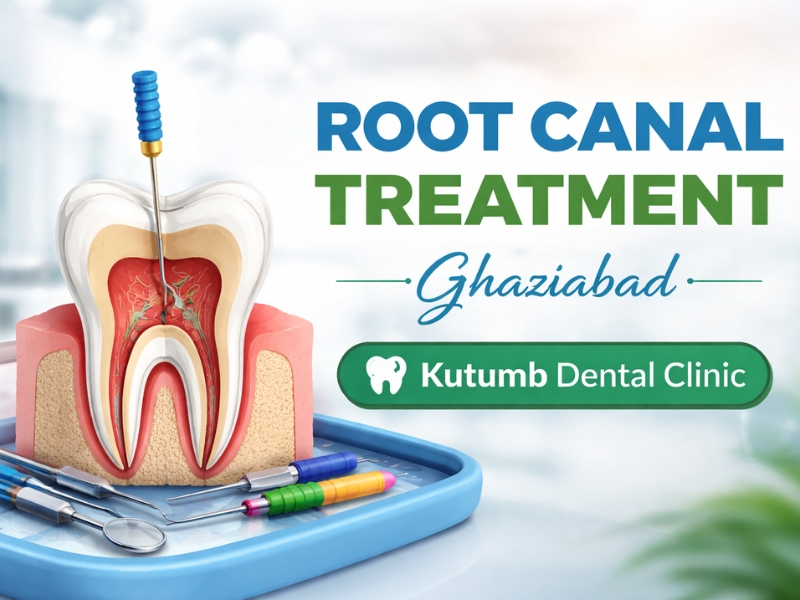
A root canal treatment is done to remove infection from inside a tooth and help save the natural tooth. In many cases, a treated tooth can last for many years with proper care. However, sometimes the tooth may develop an infection again or may not heal as expected. In such cases, a dentist may recommend re-root canal treatment, also called root canal retreatment or repeat RCT.
If you have pain, swelling or discomfort in a tooth that has already had a root canal, do not ignore it. The problem may need a dental check-up to find the exact cause.
At Kutumb Dental Clinic, patients from Vasundhara and nearby areas of Ghaziabad can visit for a dental examination and advice about suitable treatment options.
What Is Re-Root Canal Treatment?
Re-root canal treatment is a procedure performed on a tooth that has already received root canal treatment but has developed a new problem or has not healed properly.
During the first root canal, the dentist removes infected or damaged tissue from inside the tooth, cleans the root canals and seals them with a filling material.
In re-root canal treatment, the dentist opens the previously treated tooth, removes the old root canal filling material, cleans the canals again and seals them with new material.
The main aim is to remove the source of infection, support healing and save the natural tooth whenever possible.
Why Does a Tooth Need Another Root Canal?
A tooth may need another RCT for several reasons. The problem can appear months or even years after the first treatment.
1. An Extra Canal Was Missed
Some teeth have narrow, curved or extra canals that are difficult to locate. If a canal was not found or treated during the first procedure, bacteria may remain inside it and cause infection later.
2. Infection Did Not Heal Completely
The root canal system has a complex shape. In some cases, bacteria may remain in small areas that are difficult to clean. This can prevent the tooth from healing fully.
3. New Tooth Decay
A tooth that has received root canal treatment can still develop cavities. If new decay reaches the area around the root canal filling, bacteria may enter the tooth again and cause infection.
4. A Loose or Damaged Crown or Filling
After a root canal, the tooth needs a proper restoration to protect it. If the crown or filling becomes loose, cracked or damaged, bacteria can enter through the gap and cause a new infection.
5. A Crack or Injury in the Tooth
A crack or fracture may allow bacteria to enter the treated tooth. Depending on the location and depth of the crack, the dentist will decide whether the tooth can still be saved.
What Are the Signs That You May Need Re-Root Canal Treatment?
Not every previously treated tooth causes pain when a problem develops. However, some signs may indicate that the tooth needs another dental examination.
Watch for these symptoms:
- Pain while chewing or biting.
- Swelling around the treated tooth or nearby gums.
- A small pimple or recurring swelling on the gums.
- Bad taste or fluid discharge near the tooth.
- Sensitivity or discomfort around the treated area.
- Pain that returns after the earlier root canal treatment.
- A loose, broken or damaged crown or filling.
Sometimes, an infection may be found during a dental X-ray even when there is no noticeable pain. Therefore, a dental examination is important if you have concerns about a previously treated tooth.
How Is Re-Root Canal Treatment Done?
The treatment depends on the condition of the tooth, the earlier root canal work and the type of infection. The dentist first examines the tooth and may recommend dental X-rays or other imaging if needed.
The general steps may include:
Step 1: Dental Examination
The dentist checks the tooth, gums, crown or filling and surrounding area. An X-ray may help identify signs of infection or changes around the root.
Step 2: Opening the Treated Tooth
The dentist creates access to the root canal area. If the tooth has a crown, post or other restoration, some of these materials may need to be removed to reach the canals.
Step 3: Removing Old Filling Material
The old root canal filling material is carefully removed so the dentist can examine and clean the canals again.
Step 4: Cleaning and Disinfection
The canals are cleaned and shaped to remove infected material and reduce bacteria inside the tooth.
Step 5: Sealing the Canals
After cleaning, the canals are filled and sealed with suitable dental material to help prevent bacteria from entering again.
Step 6: Final Filling or Crown
The tooth needs a proper final restoration to protect it from further damage. Depending on the condition of the tooth, the dentist may recommend a new crown or another suitable restoration.
Can a Tooth Be Saved After a Failed Root Canal?
In many cases, a tooth that has not healed properly can still be saved. Re-root canal treatment may help remove the remaining infection and allow the surrounding tissues to heal.
However, retreatment is not suitable for every tooth. A severe root fracture, very little remaining tooth structure or poor supporting bone may affect the chances of saving it.
Depending on the examination, the dentist may discuss options such as:
- Non-surgical root canal retreatment.
- Endodontic surgery in selected cases.
- Tooth extraction if the tooth cannot be restored.
The right option depends on the condition of the tooth. A dentist should explain the benefits, limitations and expected outcome before treatment.
How Can You Reduce the Risk of Needing Another RCT?
You cannot prevent every root canal problem, but good oral care can reduce the risk of new decay and damage.
- Brush twice daily with fluoride toothpaste.
- Clean between your teeth every day.
- Avoid biting hard objects such as ice or hard shells.
- Get a damaged or loose filling or crown checked early.
- Visit your dentist for regular check-ups.
- Follow the dentist’s advice after root canal treatment.
- Get a recommended crown or final restoration placed on time.
These steps help protect your treated tooth and support long-term oral health.
Frequently Asked Questions
1. Can a root canal fail after several years?
Yes. A previously treated tooth can develop a new infection months or years later. New decay, a damaged crown, an untreated canal or a crack may be responsible.
2. Is re-root canal treatment painful?
The dentist uses local anaesthesia to make the procedure more comfortable. You may experience some soreness or tenderness afterwards. Your dentist can guide you on how to manage it.
3. How many times can a tooth have a root canal?
There is no fixed number for every tooth. The decision depends on the tooth’s condition, its previous treatment and whether the canals can be treated safely again.
4. Is extraction always needed after a failed RCT?
No. A failed root canal does not automatically mean that the tooth must be removed. Retreatment or endodontic surgery may be possible in selected cases. The dentist must examine the tooth before recommending an option.
5. How do I know if my old root canal has an infection?
Pain while biting, gum swelling, a recurring gum pimple or discharge may be warning signs. Some infections may not cause pain, so an examination and X-ray may be needed.
Get Your Previously Treated Tooth Checked at Kutumb Dental Clinic
Pain or swelling in a tooth that has already had a root canal should not be ignored. Early examination can help identify the cause and determine whether re-root canal treatment or another option is suitable.
If you are looking for dental care in Vasundhara, Ghaziabad, visit Kutumb Dental Clinic for a dental check-up and guidance about your treatment options.
Call us at 082876 61219 to request an appointment, or visit our clinic in Sector 5, Vasundhara, Ghaziabad.
Our Contacts
- Address: Plot No. 1365, Ground Floor, Sector 5, Vasundhara, Ghaziabad, Uttar Pradesh 201012
- Phone: 082876 61219
- Email: kutumbdental@gmail.com
- Website: https://www.kutumbdental.com/
Take care of your natural teeth. Get a dental check-up if an old root canal tooth starts causing trouble.


Leave a Reply