


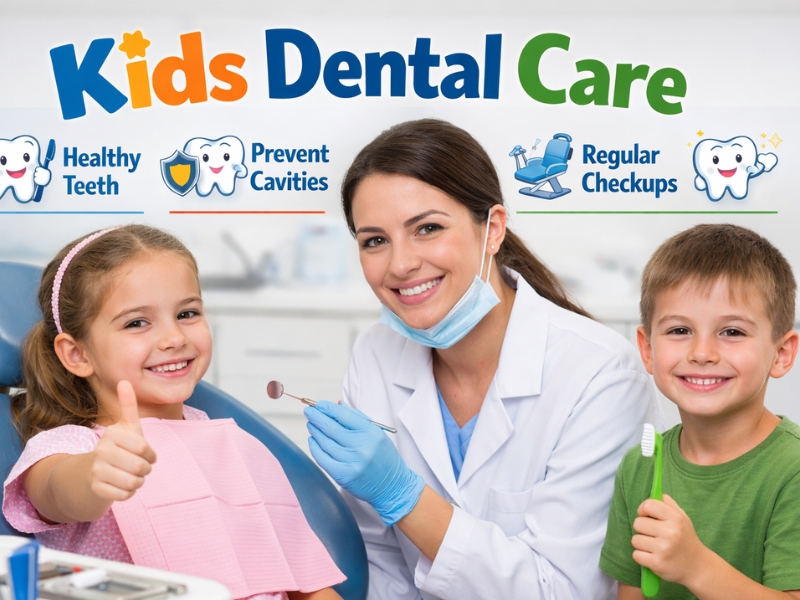
A child’s smile changes quickly as they grow. Baby teeth appear, new teeth erupt, and eventually permanent teeth take their place. During these years, good dental care is important not only for keeping teeth clean but also for supporting healthy eating, speaking, jaw development, and long-term oral health.
Many parents in Ghaziabad look for a trusted children’s dentist only when their child develops tooth pain or a cavity. However, regular preventive dental care can help identify problems early and reduce the risk of more complicated dental treatment later.
At Kutumb Dental Clinic in Vasundhara, Ghaziabad, children’s dental care focuses on prevention, early detection, healthy oral habits, and age-appropriate dental treatment.
Why Is Kids Dental Care Important?
Baby teeth are temporary, but they still have an important role. They help children chew food, speak clearly, and maintain space for permanent teeth.
Tooth decay in children can cause pain, difficulty eating, disturbed sleep, and problems with daily activities. Untreated dental problems may also affect the health and development of the teeth that come later.
Children are also developing their brushing and eating habits. Regular dental visits give parents an opportunity to understand how to protect their child’s teeth at every stage of development.
The American Academy of Pediatric Dentistry recommends establishing a dental home early in childhood, with preventive care based on the individual child’s dental needs and risk of tooth decay.
When Should a Child First Visit a Dentist?
Parents do not need to wait until a child has a cavity or toothache before visiting a dentist.
Dental organizations recommend that a child should have a dental home by around 12 months of age, or within a short period after the first tooth appears.
An early dental visit allows the dentist to:
- Check the developing teeth and gums
- Identify early signs of tooth decay
- Assess the child’s risk of cavities
- Guide parents about brushing and diet
- Discuss fluoride use
- Monitor tooth eruption and jaw development
- Identify habits that may affect dental development
Early visits can also help children become familiar with the dental environment and make future appointments more comfortable.
How to Protect Your Child’s Teeth at Home
1. Start Brushing as Soon as the First Tooth Appears
Once the first tooth comes through, parents should begin brushing it with a soft, child-sized toothbrush.
Children generally need help with brushing because young children may not yet have the coordination needed to clean every tooth properly. Parents should supervise brushing and encourage a consistent morning and bedtime routine.
For young children, the amount of fluoride toothpaste should be age appropriate. Current guidance recommends a rice-grain-sized smear for children younger than 3 years and a pea-sized amount for children aged 3 to 6 years.
2. Make Fluoride Part of the Prevention Plan
Fluoride helps strengthen tooth enamel and reduce the risk of cavities. Brushing twice daily with fluoride toothpaste is an important part of children’s oral hygiene.
However, the right fluoride approach can depend on a child’s age, dental health, cavity risk, and other sources of fluoride. A dentist can advise parents about the appropriate option for their child.
Professional fluoride treatment may also be recommended for children who have a higher risk of tooth decay.
3. Limit Frequent Sugary Snacks and Drinks
It is not only the amount of sugar a child consumes that matters. How frequently teeth are exposed to sugary foods and drinks also matters.
Frequent snacking on sweets, biscuits, chocolates, sugary drinks, or other foods containing added sugars can increase the risk of tooth decay.
Parents can encourage healthier choices such as balanced meals and water between meals. Avoiding frequent sugary drinks, particularly before bedtime, can also support better oral health.
4. Do Not Ignore Baby Teeth
A common misconception is that cavities in baby teeth do not matter because these teeth will eventually fall out.
Baby teeth still need proper care. A decayed or painful baby tooth can affect a child’s comfort and ability to eat properly. Depending on the situation, dental infection can also require timely treatment.
Protecting baby teeth helps children maintain good oral function while their permanent teeth develop.
What Are Dental Sealants and Can Children Benefit From Them?
Dental sealants are protective coatings placed on the grooves and pits of certain teeth where food and plaque can collect.
They may be recommended for children whose teeth have deep grooves or who have a higher risk of cavities. Sealants can be considered for both primary and permanent teeth when clinically appropriate.
A dentist should assess the child’s individual cavity risk before recommending preventive treatment.
Watch for Signs of Dental Problems
Parents should arrange a dental examination if a child develops:
- Toothache or repeated tooth sensitivity
- Swollen or bleeding gums
- Visible spots or holes on the teeth
- Persistent bad breath
- Difficulty chewing
- Pain while eating or drinking
- A broken or chipped tooth
- Facial or gum swelling
- Difficulty opening the mouth
- A tooth that is not erupting as expected
Dental trauma should also be assessed promptly, especially when a permanent tooth has been damaged or displaced.
Children’s Dental Care During the Growing Years
Dental care needs can change as a child grows.
During infancy and early childhood, the focus is mainly on preventing early tooth decay and teaching parents effective oral hygiene habits.
As children enter school age, dentists can monitor the eruption of permanent teeth, cavity risk, oral hygiene, and developing bite.
During the mixed-dentition stage, both baby and permanent teeth may be present. This is an important time to monitor spacing, tooth eruption, jaw development, and possible orthodontic concerns.
As children become teenagers, regular dental care continues to be important because lifestyle changes, orthodontic treatment, diet, and oral hygiene habits can influence dental health.
Early identification of developing orthodontic or eruption problems can help determine whether monitoring, preventive care, or further treatment is appropriate.
Why Choose Kutumb Dental for Kids Dental Care in Ghaziabad?
Parents looking for a dental clinic in Vasundhara, Ghaziabad, can consider Kutumb Dental for regular children’s dental care and preventive oral health guidance.
The clinic provides children’s dentistry along with general dental services, allowing families to manage different stages of oral care in one dental setting.
You can learn more about the clinic, its approach, and available dental services before scheduling a visit.
Frequently Asked Questions About Kids Dental Care in Ghaziabad
At what age should my child first visit a dentist?
A child should ideally have a dental home by around 12 months of age, or soon after the first tooth appears. Early visits help identify dental problems and establish healthy oral care habits.
How often should children visit the dentist?
The ideal interval depends on the child’s oral health, cavity risk, age, and dental development. The dentist can recommend a suitable follow-up schedule after examining the child.
Should children use fluoride toothpaste?
Fluoride toothpaste is generally recommended for children in age-appropriate amounts. For very young children, parents should follow professional guidance regarding the amount and use of fluoride toothpaste.
Are baby teeth really important?
Yes. Baby teeth help children chew and speak and maintain space during the development of permanent teeth. They should be kept healthy until they naturally become loose and are replaced.
What should I do if my child has a toothache?
Do not ignore persistent tooth pain. Arrange a dental examination so the cause can be identified and treated appropriately. Avoid giving the child dental treatment at home without professional advice.
Can dental sealants prevent cavities in children?
Dental sealants can help protect susceptible tooth surfaces from decay. Whether they are appropriate depends on the child’s teeth and individual cavity risk.
Give Your Child a Healthy Start to a Lifetime of Good Oral Health
Good kids dental care is not only about treating cavities. It is about building healthy habits, protecting developing teeth, monitoring growth, and identifying dental problems before they become more difficult to manage.
If you are looking for kids dental care in Ghaziabad, children’s dentistry in Vasundhara, or a dentist for your child in Ghaziabad, schedule a dental consultation at Kutumb Dental Clinic.
Start early, make dental visits a regular part of your child’s healthcare routine, and help your child grow with a healthy, confident smile.



Leave a Reply